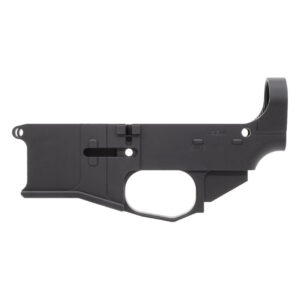
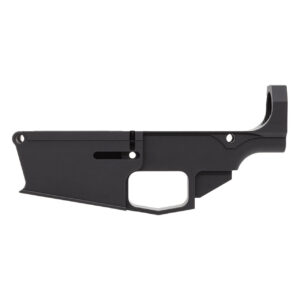
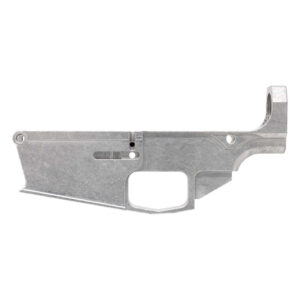
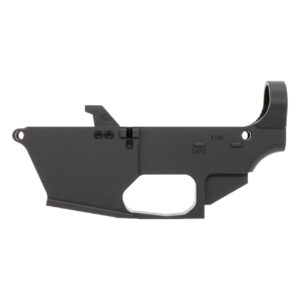
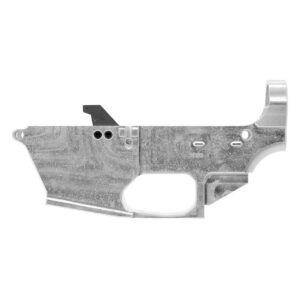
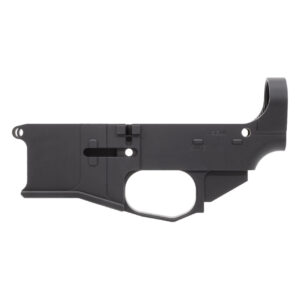
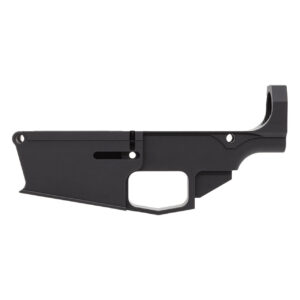
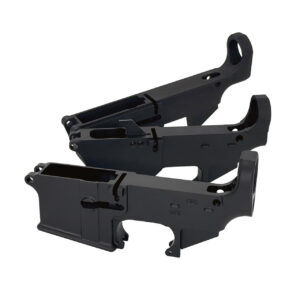
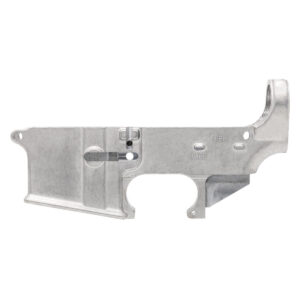
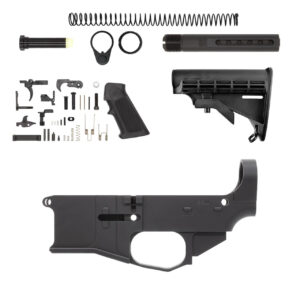
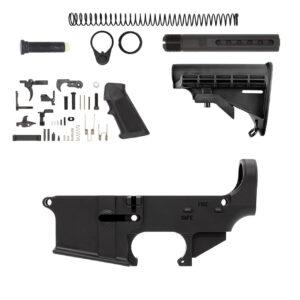
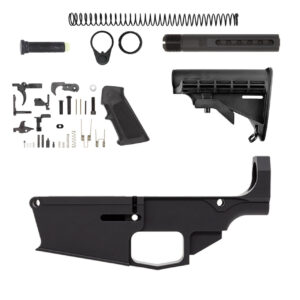
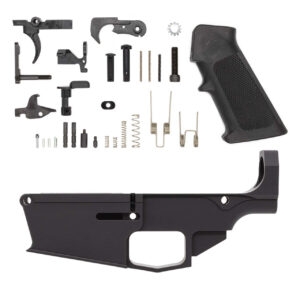
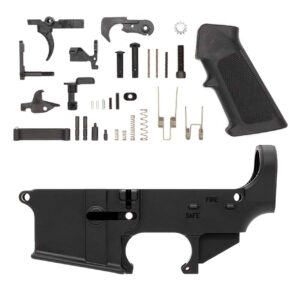
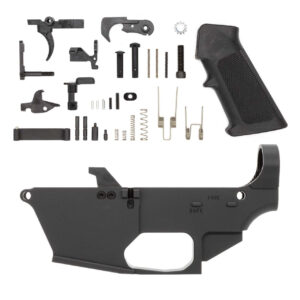
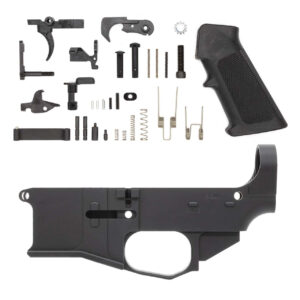
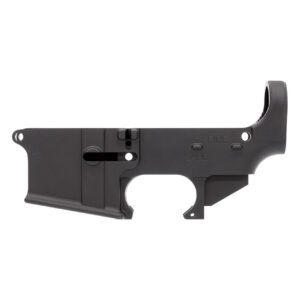
In the market for an 80 percent lower? The 80 lower receiver is a vital component for any do-it-yourself AR-15 AR9, or AR 10/308 build. Every 80 percent lower we sell is proudly made in the U.S.A. from quality billet aluminum (6061-T6), mil-spec forged aluminum (7075-T6), or weapons-grade polymer.
Why Build an AR With an 80 Percent Lower?
There are plenty of benefits of using an 80% lower to build your AR-15, AR-10, or AR9:
Privacy. Under ATF’s 2022 frame or receiver rule, which the Supreme Court upheld in Bondi v. VanDerStok in March 2025, a receiver blank that hasn’t reached the point where it can be readily completed isn’t a firearm, so it ships to you without a serial number or FFL transfer.*
*Local and state laws vary. Some states require serialization of all firearms, and some states have banned 80% lowers.
Cost. By buying an unfinished receiver, you save on manufacturing costs and skip the “brand tax” most gun makers charge, plus the FFL transfer fee.
Customization. By starting with a blank receiver, you get to decide what parts you install to finish your custom AR build, and you avoid paying extra for parts you don’t want.
Compatibility. Our 80% lowers are made in the U.S.A. Lowers are forged and milled to tight tolerances, ensuring a perfect fit and finish. Lowers are MIL-SPEC and compatible with all off-the-shelf AR-15 parts. Once you finish your lower, it will be identical in form and function to the lower receivers found on any AR-type rifle available at any gun store.
Read our Complete Guide on How to Build an AR-15
What Is an 80 Percent Lower?
The ATF calls these parts “receiver blanks.” Under ATF’s 2022 frame or receiver rule, which the Supreme Court upheld in Bondi v. VanDerStok in March 2025, a receiver blank that hasn’t reached the point where it can be readily completed isn’t a firearm. A blank that has reached that point, or one sold together with a jig or tooling to finish it, is treated as a firearm. Our 80% lowers are sold on their own, without jigs or tooling. Once you complete one, it’s a firearm, and thousands of shooters have built reliable and accurate AR-type rifles and pistols with our units.
Cutting and drilling the lower at home with hand tools — something you, the builder, will do yourself — turns an 80 percent lower into a firearm. Whether it’s an AR-15 or AR-10, thousands of shooters have built reliable and accurate AR-type rifles and pistols with our units.
Read this 80% Lower FAQ to learn more.
Types of 80 Percent Lowers
There are several types of 80% lower receivers available for the AR platform. Depending on which 80 lower you pick, you can build an AR-15, AR9, or AR-10 chambered in the following calibers:
AR-15 80% Lower (5.56/.223 Platform)
The AR-15 80 lower functions just like any stripped lower receiver you’d buy from an FFL or gun store. These lowers are available in billet (6061-T6) and forged (7075T6) aluminum, and polymer. With one of these lowers, you can build an AR chambered in:
- 5.56 NATO
- .223 Remington
- .223 Wylde (chambers both 5.56 and .223)
- 300 AAC Blackout
- 6.5 Grendel
AR-10 80% Lower (.308)
The AR-10 80 lower is based on the DPMS .308 AR platform, which currently acts as the universal standard for all .308-chambered AR-type rifles. Although technically different from the original ArmaLite AR-10, the DPMS .308 is still referred to as the AR-10 platform, and it is practically identical in form and function. It can chamber the following cartridges:
- .308 Winchester
- 7.62×51 NATO
- 6.5 Creedmoor
AR-9 80% Lower (9mm)
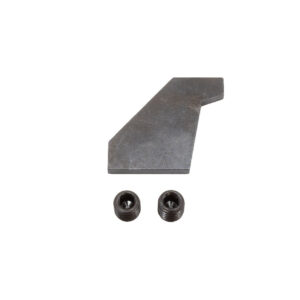
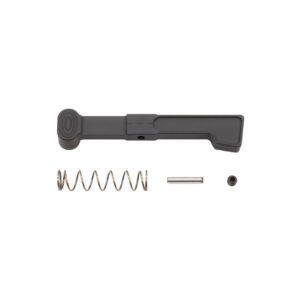
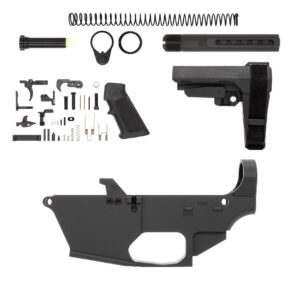
The AR9 80 lower is based largely on the AR-15 lower. It uses most of the same components, including the same grip, trigger, hammer, safety, and disconnector, as well as the same buffer system and buffer tube. But it uses a custom magazine well and ejector to handle the 9mm cartridge.
Not sure which lower to pick? This guide compares all 80% lowers.
80 Percent Lower FAQs
Is an 80 percent lower legal?
Under federal law, generally yes. Under ATF’s 2022 frame or receiver rule, which the Supreme Court upheld in Bondi v. VanDerStok in March 2025, a receiver blank that hasn’t reached the point where it can be readily completed isn’t a firearm. Some states and cities restrict or ban 80% lowers, and some, like California, require serialization and a background check. Check your state and local laws and our Shipping & Returns page before ordering.
Do I need an FFL or background check to buy an 80 percent lower?
Not under federal law. Our 80% lowers are sold on their own, without jigs or tooling. State laws vary, and some states require a background check or ban sales outright.
Can you ship an 80 percent lower to my state?
We can’t ship 80% lowers to states that restrict them, and orders from those states are canceled. The current list is on our Shipping & Returns page.
Does an 80 percent lower come with a jig?
No. Our 80 percent lowers are sold on their own, without jigs or tooling. Under the 2022 rule, a receiver blank sold together with a jig or tooling to finish it is treated as a firearm.
What’s the difference between an 80 lower receiver and a stripped lower receiver?
A stripped lower receiver is finished. It’s a firearm with a serial number, and you buy it through an FFL with a background check. An 80 lower receiver is an unfinished blank that isn’t machined to accept the fire control parts. Under federal law it isn’t a firearm until it reaches the point where it can be readily completed. Once completed, it works like any stripped lower with standard parts. What is an 80 percent lower?
What’s the difference between a forged and a billet 80 percent lower?
Forged lowers are pressed from 7075-T6 aluminum, the same material and process as most mil-spec lowers. Billet lowers are machined from a solid block of 6061-T6, which allows extras like the threaded bolt catch and takedown detent holes on our Premium billet lower. Both use standard parts. Billet vs. Forged Receivers
What is a blemished 80 percent lower?
It’s a lower with cosmetic marks only, sold at a discount. It works the same and is just as strong as our standard lowers. Shop blemished lowers.
Will an 80 percent lower work with standard AR-15 parts?
Yes. Our AR-15 80 percent lowers are mil-spec, so once completed they take standard uppers, lower parts kits, buffer tubes and stocks. AR-10 and AR-9 lowers need their own uppers (see below).
Which 80 percent lower do I need: AR-15, AR-10 or AR-9?
Match it to your caliber:
- AR-15 for 5.56/.223 and 300 Blackout
- AR-10/.308 for .308 Winchester, 7.62×51 NATO and 6.5 Creedmoor
- AR-9 for 9mm with Glock-pattern magazines
Which .308 upper receiver style is compatible with your lowers?
Our .308 80 percent lowers are DPMS Gen 1 pattern (LR-308), the most common commercial .308 AR pattern. They fit DPMS Gen 1 .308 uppers, including the uppers and kits we sell, but not uppers built for the original ArmaLite AR-10 pattern. We recommend our LR-308/AR-10 lower parts kit, which includes the threaded bolt catch pin.
Do your AR9 lowers have a last-round bolt hold-open?
Not by themselves. Our AR-9 lowers don’t have the internal linkage for last-round bolt hold-open (LRBHO). If you want the bolt to lock back on an empty magazine, use an AR-9 upper with integrated LRBHO, and check your upper’s specs before ordering.
80% Lowers: State Laws Vary
Some states have banned 80% lowers and certain firearm parts, or have otherwise restricted the sale and ownership of products we sell. So, be sure to check your local and state laws. We can’t ship our products to certain states. Please check our Shipping & Return Policy before placing an order (See Restrictions).
Execute the right to bear arms today. Your build awaits.