Bushnell TRS-25 (1x25mm) Red Dot Unboxing, Setup & Review
Red dots have gotten pricey. With top-shelf brands like Trijicon and Sig Sauer introducing reflex sights that cost hundreds of dollars, it begs the question: Are any “cheap” red dots worth the savings? We’re taking a closer look at the Bushnell TRS-25 — a small, tube-style red dot with a typical Picatinny mount that comes in right around the $100 mark.
Bushnell TRS-25 Features
- Full waterproof and submersible
- 5,000+ hours of battery life (CR2032)
- Nitrogen-purged and sealed lenses
- Shockproof against high-energy recoil
TRS-25 Additional Specifications
- Construction: 7075-T6 Aluminum
- Coating: Hardcoat Black Anodizing
- Adjustment Range: +/- 70 MOA
- Adjustment/click: 1 MOA
- Objective lens: 1x20mm
- Brightness Settings: 11
- Reticle: 3-MOA dot
- Weight: 3.6 Oz.
- Mount: Picatinny
Unboxing the Optic
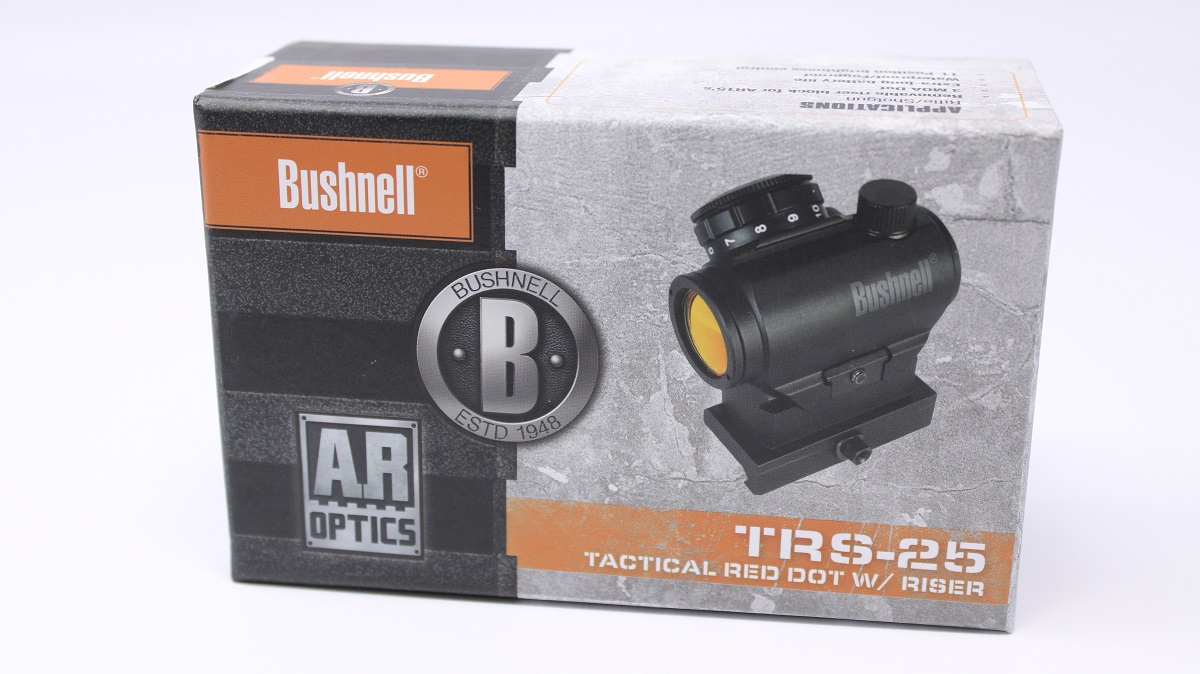
The TRS-25 scope comes in a small, compact box that is easy to store.
It’s packaged well and presents nicely (hint: it makes for some nice
gifting). Inside, the scope comes packaged with a foam liner, and some
documentation and manuals. The scope is a great gift for the hunter or
marksman in your life.
The set comes with the typical Allen-head wrench that is used to
adjust most optics. This wrench can be used to adjust the Picatinny rail
adapter mount. The larger rail adapter, however, will require a
separate socket or flathead screwdriver
Picatinny Riser
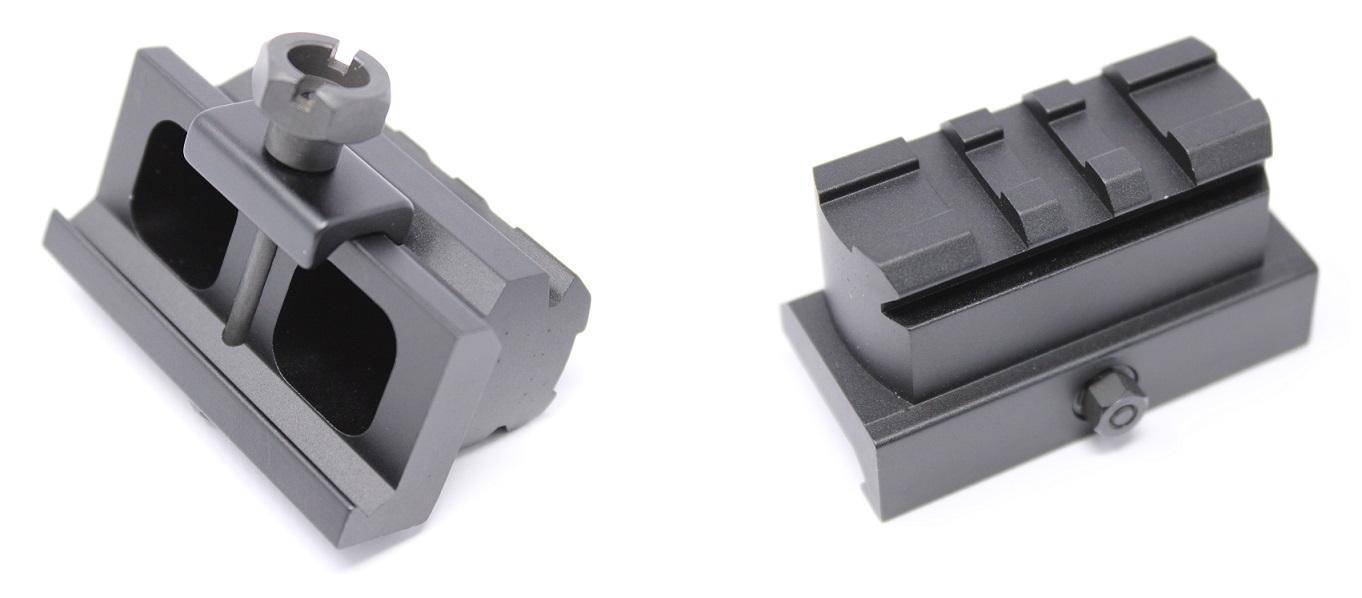
The Picatinny riser mount that comes with the product is actually
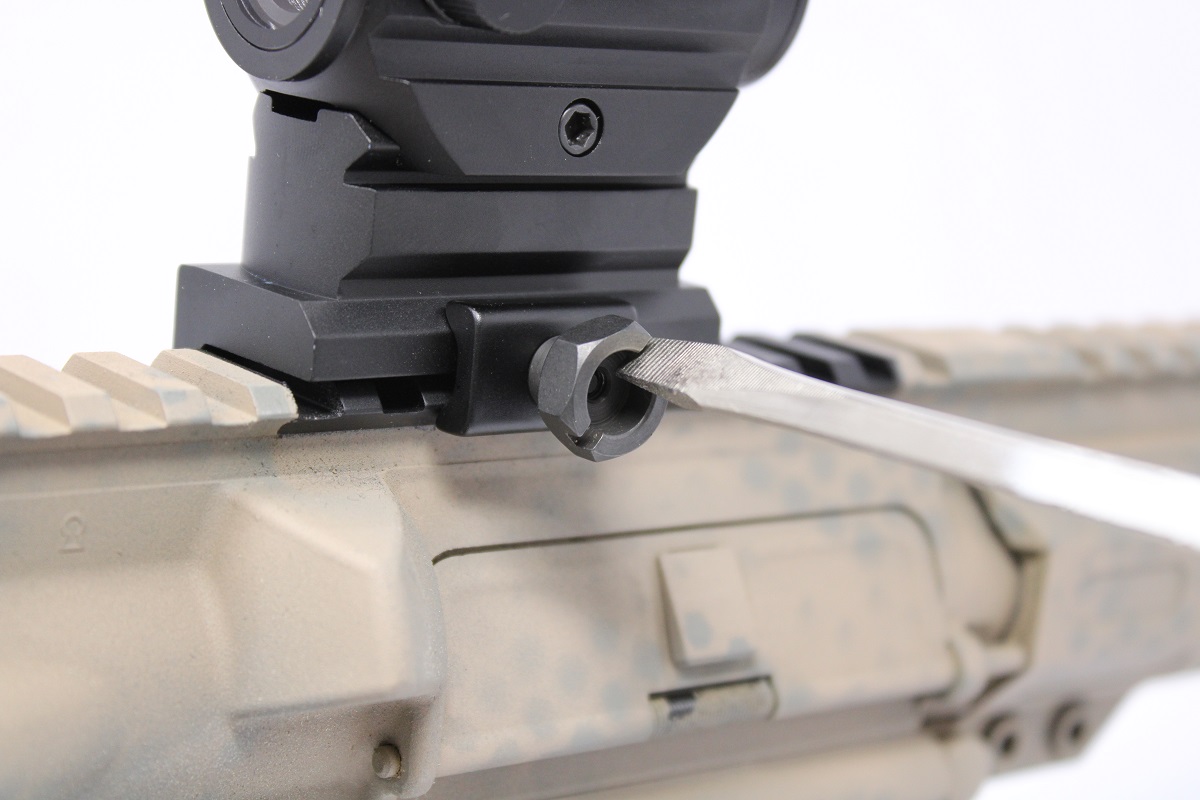
quite well made. It’s sturdy and the locking lever can be done up with
just your fingers. However, if you’re firing anything that’s relatively
powerful, we recommend tightening it with a flathead or the appropriate
socket.
Optic Height With and Without Riser Mount
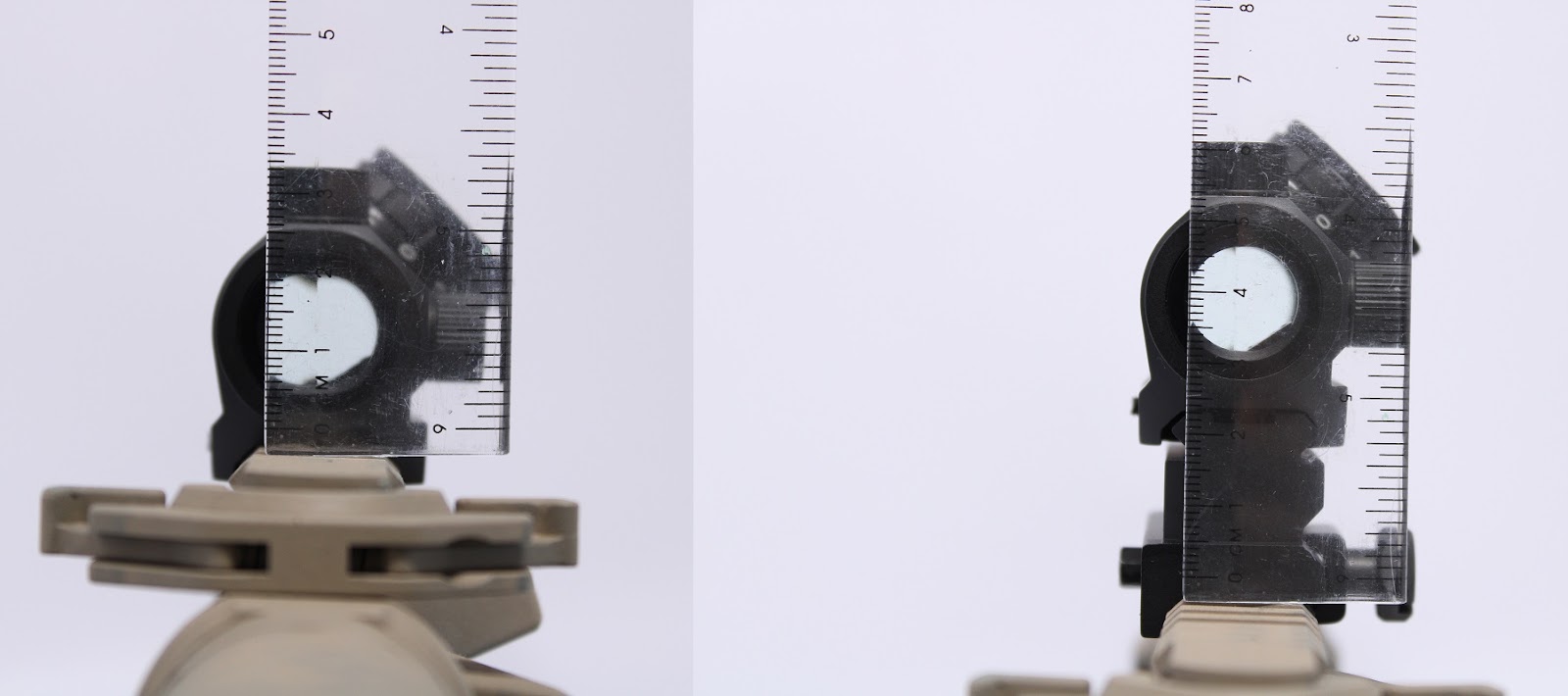
The TRS-25 scope is small, so the riser mount will be important in
your final setup. Without the riser mount, the center of the optic will
be only about 1.2 cm over the rail, or 0.47″. This affords an incredibly
short height-over-bore, which makes for better accuracy. But some
shooters might not like feeling that cramped when they’re eyeballing
downrange, especially on something like an AR-15.
In that case, you’ll want to use the included riser mount. The riser
bumps up the optic’s height to about 3.8 cm over the rail, or about 1.5″
since this is ’Murica.
The TRS-25 scope is comparable in size to most other compact red
dots, which makes it a good choice for most shooters and their rifles.
Activating The Optic
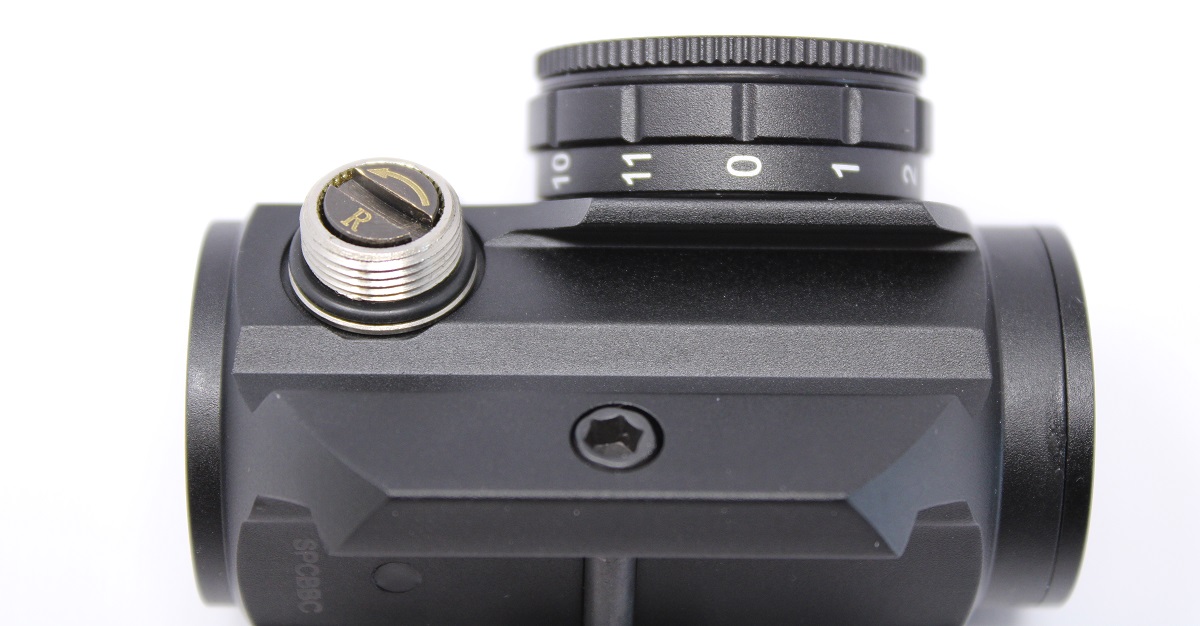
The TRS-25 comes with a CR2032 battery installed. However, in order
to get the unit up and running, you need to access the cell and remove a
small protective film separating the cell from its contacts. To do
that, you need to untwist the O-ring-sealed cap on the brightness
adjustment knob. Additionally, we also pulled off the RIGHT-LEFT
adjustment knob to show off the MOA adjustment turrets. These turrets
also sport aluminum threaded caps with O-rings to keep the unit
waterproofed.
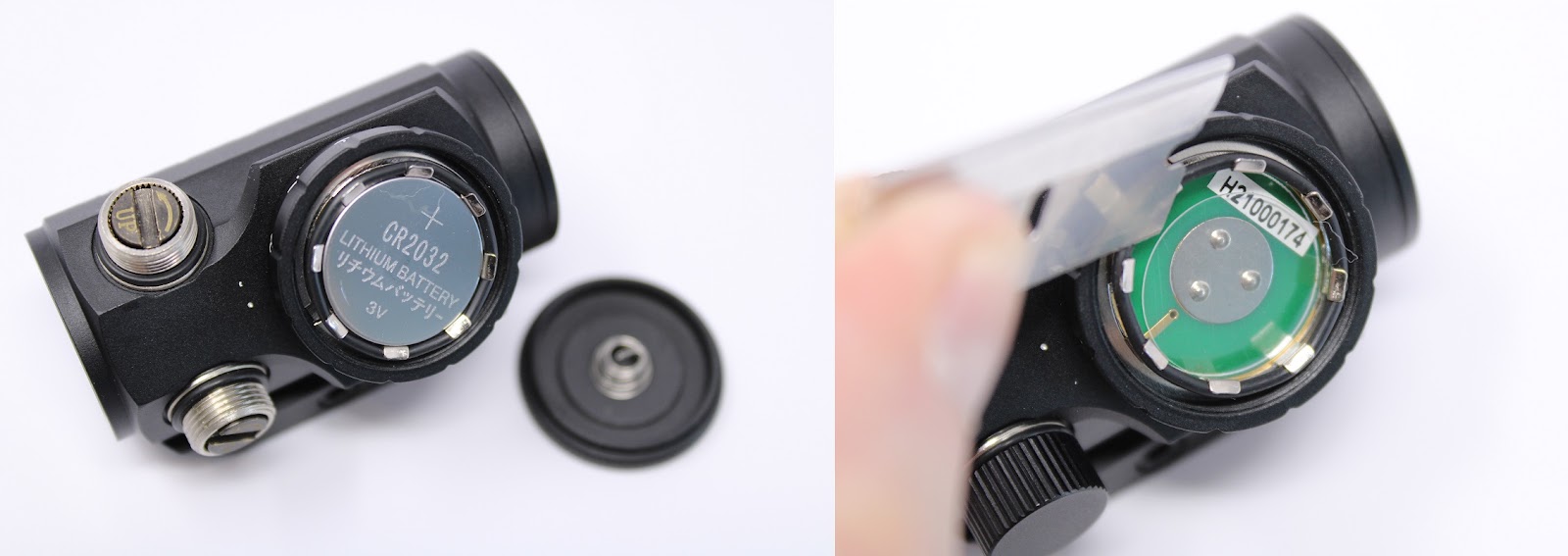
With the battery exposed, just pop it out of its metal retaining
clips with a razorblade or knife. Then use the edge of your blade to
gently pull off the film covering the cell contacts. Then all you need
to do is pop the cell back in (make sure the POSITIVE lead is facing
you) and screw the waterproofing cap back on. By the way, Bushnell did a
nice job with making this unit waterproof. Inside the battery
compartment is yet another O-ring, providing double the protection.
Turret Caps and Ocular Lens
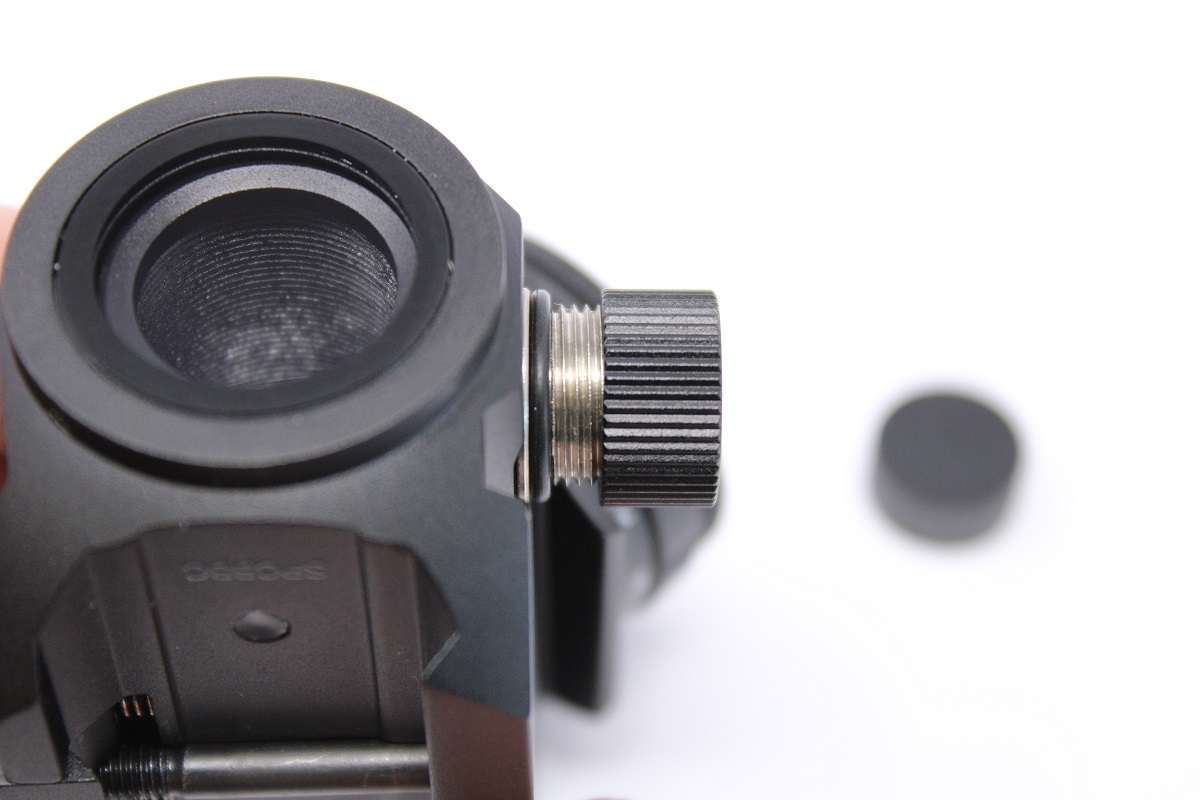
Keeping with the theme of making the Bushnell TRS-25 watertight, we
spy more O-rings at the base of the threaded turrets. The caps are
knurled and have a nice, positive locking feel when they’re cinched
down. The O-rings are thick and don’t warp or crush easily, ensuring the
unit can take on water while protecting the innards.
The eyepiece lens is also shown with its protective metal ring seated
inside the rear of the aluminum one-piece housing. The glass on this
unit is very clear and we saw no distortions, aberrations, or fish-eye
effects when scoping with the Bushnell TRS-25 downrange.
Multi-Coated Objective Lens
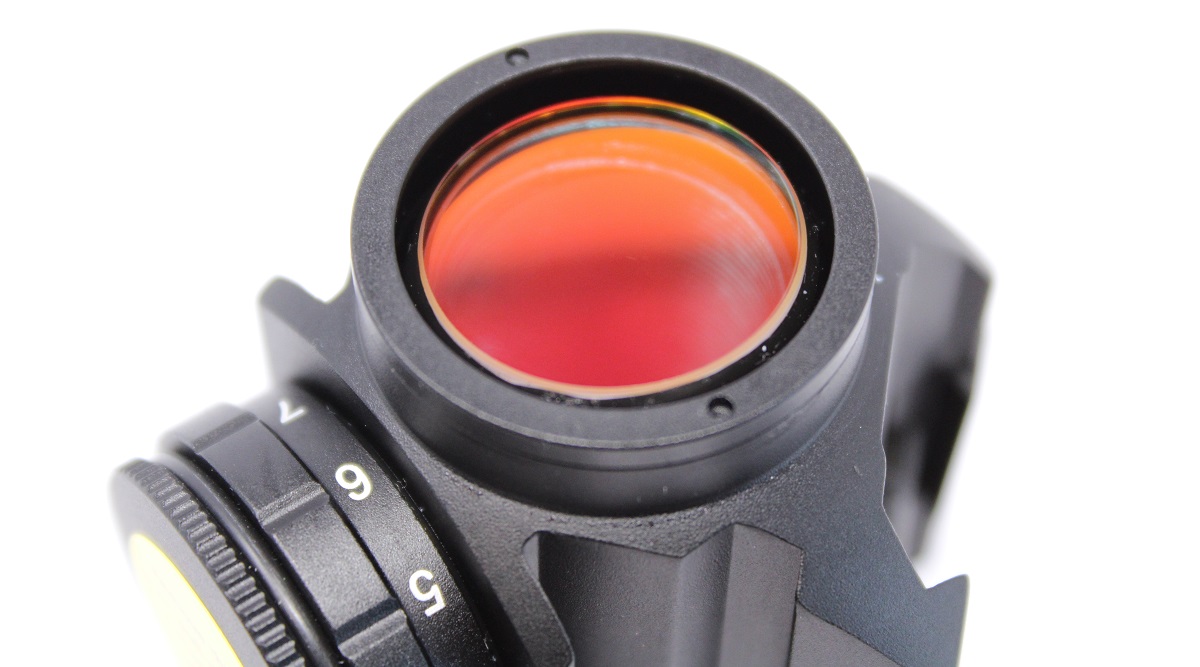
The objective lens – where all the important sight action happens –
is beautifully cut and coated. Like the eyepiece, it’s sealed well and
slightly recessed inside the housing to protect against any impacts. The
entire unit is also nitrogen purged to prevent fogging and condensation
in wet-weather environments.
The Red Dot Reticle
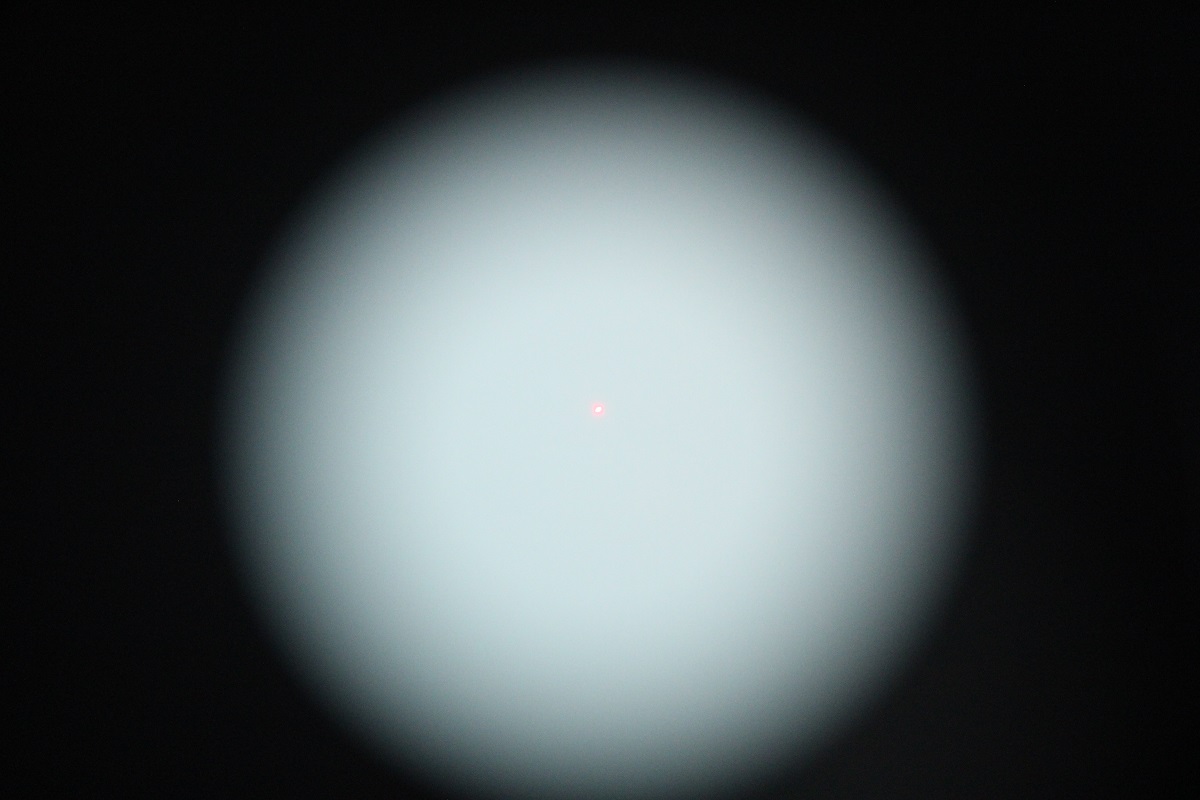
It can be difficult to take a good picture of a laser reticle,
especially if it’s moving, but we managed to get a still shot of the
Bushnell TRS-25 on its highest brightness setting. The reticle is smooth
and round, with no aberration, ghosting, or “double vision” effect that
some lasers have at low brightness
Does it work well enough on its highest and lowest settings? Yes. The
dot’s bright enough for mid-day shooting on its highest setting
(pictured), and its lowest brightness setting is nearly invisible unless
you’re in absolute darkness. There is, unfortunately, no night-vision
setting, so even the lowest brightness setting is reserved for the naked
eye. There are 11 brightness settings in all, and battery life is
estimated to be around 5,000 hours at medium brightness (setting 5 to
6).
Making Windage/Elevation Adjustments
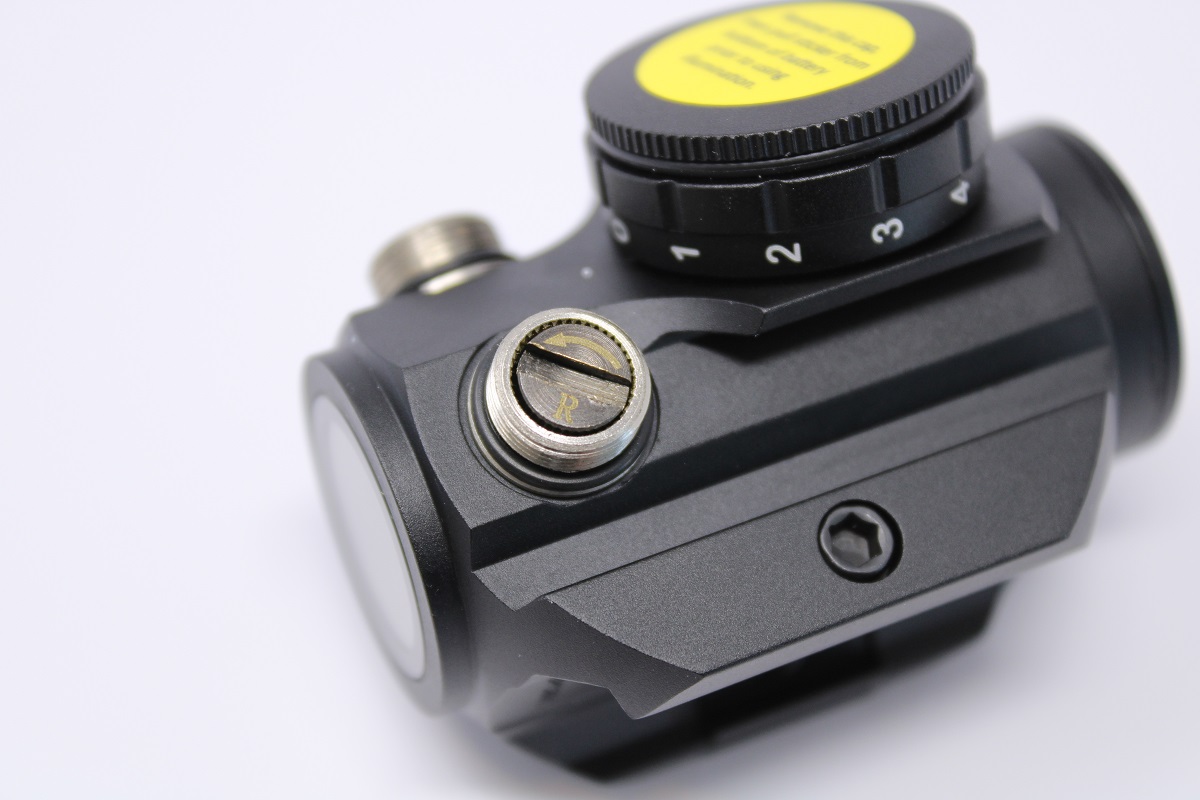
Making the appropriate elevation and windage adjustments for
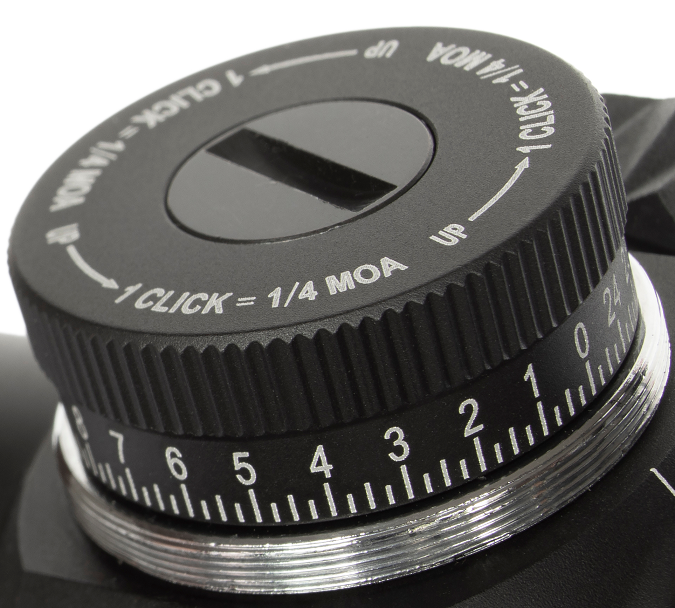
hold-overs or zeroing is easy enough. One click of each turret is 1 MOA,
and each turret is clearly marked with which direction you need to
click to make adjustments. The turrets are tactile with positive clicks.
A small flathead, multi-tool, or flattened spent shell casing is best
for making adjustments.
Final Thoughts: What’s Not to Like?
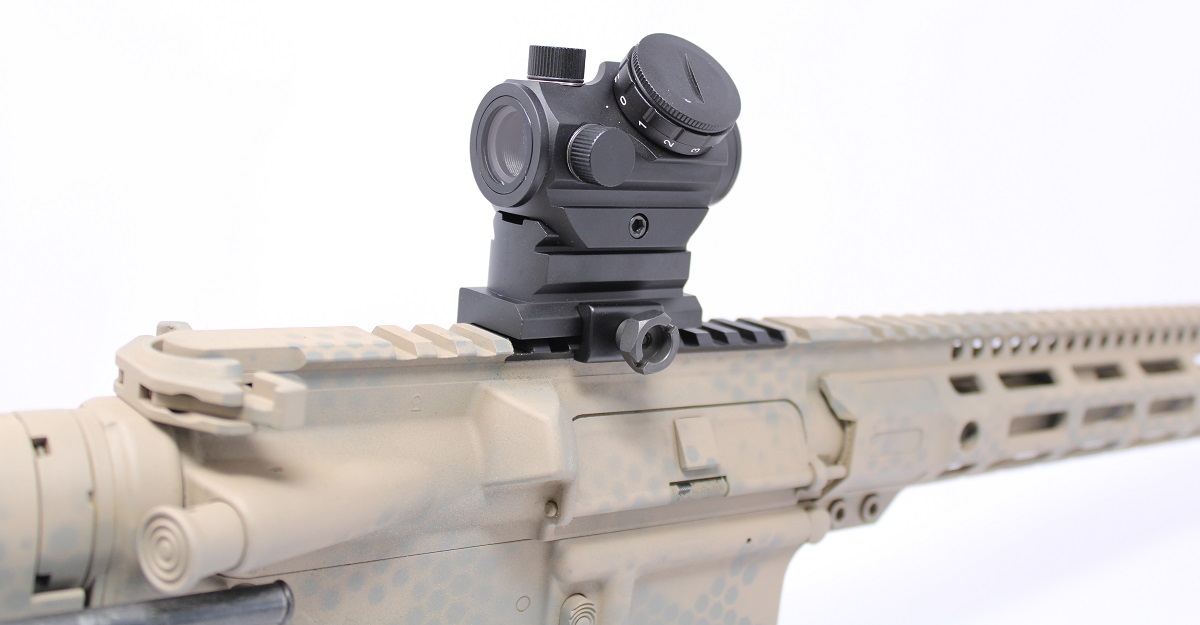
So, is the Bushnell TRS-25 red dot a great optic? Overall, yes.
Especially at its roughly $100 price point. This shooter has worked with
optics and dots ranging from micro’s and affordable units like this,
all the way up to military-issued EOtechs and Aimpoints.
Having gotten my hands and eyes on one, I would trust the Bushnell
TRS-25 to get the job done. It’s well built and feels like an optic that
costs at least twice as much. The anodizing, aluminum body, O-ring
seals, and adjustments all work quite well and they feel solid. Nothing
is plastic and nothing feels wobbly or weak.
Is there anything not to like about the Bushnell?
If we get nit-picky, yes. The tension bar on the riser doesn’t run
the full length of the riser itself, so you need to make sure that it’s
lined up correctly on the rail when you torque it down.
Mind you, this is an incredibly minor annoyance that doesn’t affect its performance or overall clamping force.
Installing this on an AR-15, I felt a little kinked in the neck
trying to get a bead downrange without using the riser. Of course, this
is just one rifle platform and the AR tends to have a low rail-over-bore
height already.
Other rifles or ARs running a high-rise Picatinny rail on certain
upper receivers should do fine without the riser, and the low
height-over-bore of the Bushnell does help with accuracy. So it’s a
trade-off.